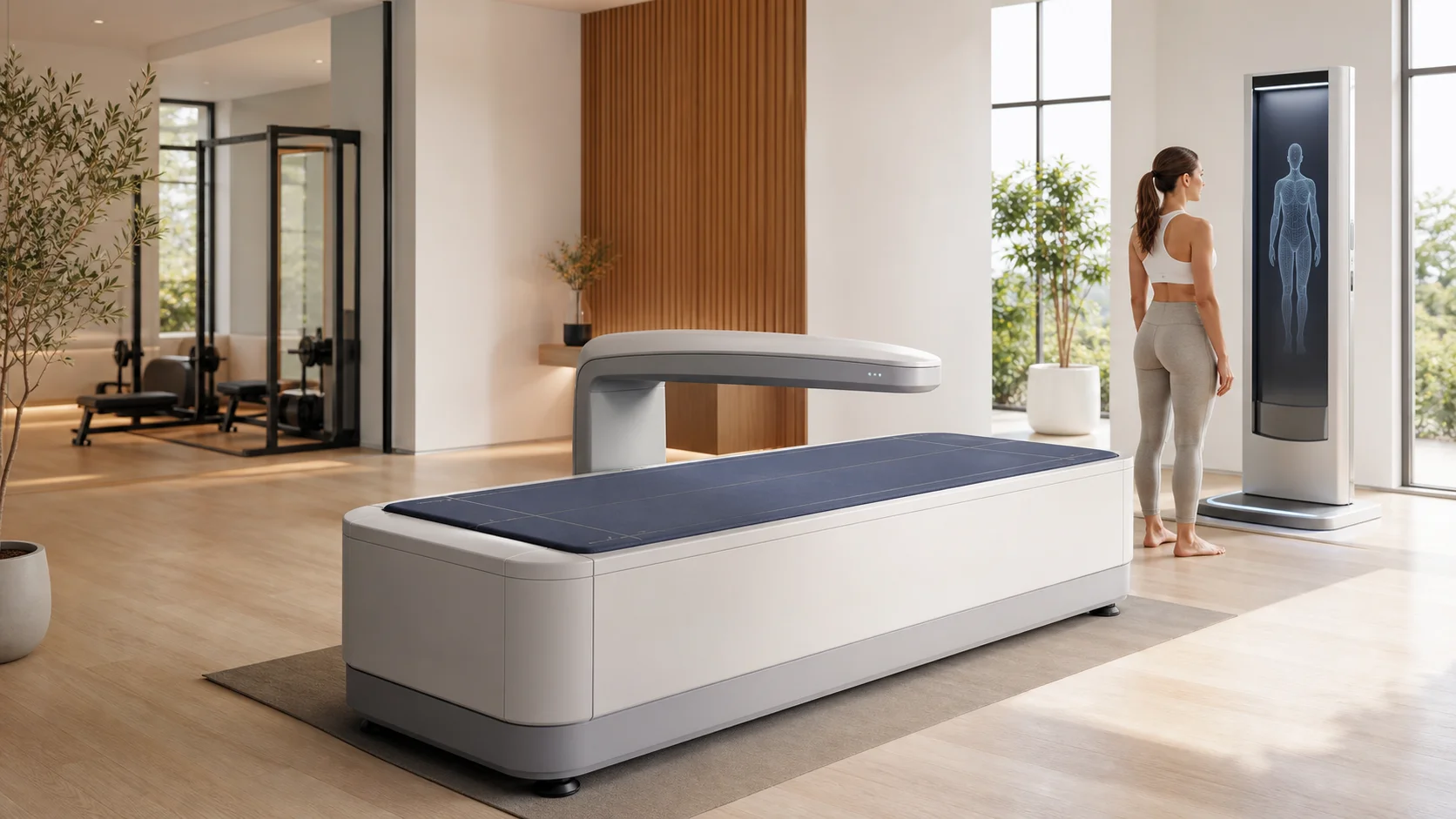
Quick answer
A 3D body scan is built to map your outside shape. A DEXA body composition scan is built to estimate the compartments inside your body. Both can be useful, but they answer different questions.
A 3D body scanner uses cameras or optical sensors to create a surface model of your body. It can be especially useful for visual shape change, circumferences, and a fast repeatable record of how clothing-fit areas are changing. When it provides body-fat or lean-mass numbers, those are estimates calculated from the surface model and that system's software.
A whole-body DEXA scan uses two X-ray energy levels and software to estimate fat mass, lean soft tissue, bone mineral content, body-fat percentage, and—depending on the report—regional results. It is usually the stronger fit when your question is about a body-composition baseline rather than external shape alone.
The key rule is simple: do not subtract a 3D body-scan result from a DEXA result and call the difference progress. Pick the method that fits your goal, then compare future results from the same method under similar conditions.
For a local DEXA baseline, start with DEXA Scan in Irvine & Orange County.
What a 3D body scan actually measures
Most 3D body-scan systems capture the external surface of your body while you stand in a standard pose. The scan can generate a digital body shape and measurements such as waist, hip, arm, thigh, or torso circumference. That makes it naturally useful for tracking visible change and for keeping an automated measurement record without relying on a tape measure alone.
The important distinction is that the scanner sees the surface. It does not directly separate fat tissue, lean soft tissue, and bone inside the body. If the report includes body-fat percentage, fat mass, or lean-mass estimates, the device is using an algorithm that relates body shape and other inputs to a body-composition model.
That approach can be useful. A 2023 study comparing duplicate 3D optical and DEXA scans found that one overall 3D optical model produced useful body-composition estimates across a broad adult sample. The same study also found lower repeat precision for the 3D optical estimate than for DEXA and noted that some participant subgroups may need model adjustments. That is a good reminder that a 3D body-scan number is a model output—not a direct tissue measurement or a universal truth.
What a DEXA body composition scan measures
A whole-body DEXA scan produces a different kind of report. The International Society for Clinical Densitometry says adult total-body reports should include total mass, total lean mass, total fat mass, percent fat mass, bone mineral content, and other report information as appropriate.
For a fitness or wellness client, the practical benefit is context. Instead of only seeing an outside-shape change or one estimated percentage, you may be able to review:
- Estimated total fat mass and body-fat percentage
- Estimated lean soft tissue
- Bone mineral content
- Broad arm, leg, and trunk regions
- Available regional metrics such as android/gynoid or visceral-fat estimates, depending on the scanner and report
DEXA lean soft tissue is not the same as pure skeletal muscle, and no single report can explain why a number changed. Hydration, glycogen, food volume, positioning, and scan conditions can all affect a close comparison. Still, the report separates body-composition compartments in a way an optical surface scan does not.
For a plain-English walkthrough of those categories, read How to Read Your DEXA Scan Results.
Why the two reports can disagree
It is normal for a 3D body scan and a DEXA scan to report different body-fat percentages or lean-mass values on the same day. They start with different information and use different assumptions.
- 3D body scan: maps external shape, then estimates body composition through a software model.
- DEXA: uses X-ray attenuation and analysis software to estimate bone mineral, fat mass, and lean soft tissue.
Neither difference automatically proves that one appointment failed. A 3D body scan might show a useful change in waist or body shape while a DEXA report gives more compartment detail. The mistake is treating estimates from two systems as if they belonged on the same perfectly precise spreadsheet.
If you switch from a 3D body scanner to DEXA, save the old 3D report for context and treat your first DEXA report as a new baseline. If you continue with 3D scans for shape tracking, compare your next 3D scan to the prior 3D scan—not to a DEXA percentage.
The same baseline principle applies when you move between impedance devices. See DEXA Scan vs InBody for that comparison.
Choose a 3D body scan when shape is the main question
A 3D body scan can be a sensible primary tool if the decision in front of you is mostly about external change. For example:
- You want automated circumference and shape measurements between larger milestones.
- You find visual change more motivating than a detailed composition report.
- You want to track how waist, hip, or torso dimensions move over time.
- You have access to the same scanner and can repeat the same pose and routine.
The best use is to keep the process consistent. Use the same system, similar clothing, similar posture, and a similar time of day when practical. A surface scan becomes more useful when it can show a stable series rather than a one-off result.
Choose DEXA when the body-composition question is more specific
DEXA is usually the better fit when you want a detailed starting point before a meaningful training, nutrition, or weight-change phase. It can add context that a surface model cannot provide on its own.
Consider a DEXA baseline if you want to ask questions such as:
- Did an eight-to-twelve-week fat-loss phase change estimated fat mass as expected?
- Is scale weight stable while estimated fat mass and lean soft tissue are changing?
- Do the arms, legs, and trunk show a broad pattern that helps explain a training phase?
- Do you want to understand fat mass separately from body-fat percentage?
- Are you about to begin a body-recomposition, muscle-gain, or guided weight-loss phase?
DEXA does not tell you which workout or diet you should follow. It gives you a higher-detail checkpoint to use beside training performance, measurements, photos, nutrition consistency, and professional guidance when needed.
For a goal-specific use case, read DEXA Scan for Body Recomposition: When the Scale Stalls.
A practical way to use both without mixing the data
You do not have to choose one tool forever. The two methods can play different roles as long as you give each one a clear job.
One practical setup is:
1. Take a DEXA baseline before a focused body-composition phase. 2. Use a 3D body scan or tape measurements between milestones if shape and circumference feedback helps you stay engaged. 3. Repeat the DEXA scan after enough time has passed to answer a real question about fat mass and lean soft tissue. 4. Keep the reports in separate series. Use the 3D scans to compare shape with prior 3D scans, and use the DEXA scans to compare body-composition estimates with prior DEXA scans.
That keeps the useful signal from each tool without pretending that a waist change, a 3D body-fat estimate, and a DEXA fat-mass estimate are interchangeable measurements.
How to make either method more repeatable
Repeatability matters more than chasing the most flattering number. For either method, try to reduce avoidable changes:
- Use the same device and facility when possible.
- Follow the facility's clothing and preparation instructions.
- Schedule follow-ups at a similar time of day when practical.
- Keep food, hydration, recent hard training, and routine reasonably similar for comparable checkpoints.
- Save the complete report rather than only a screenshot of one number.
- Look at a trend that is large enough to matter for your actual decision.
For DEXA in particular, consistent preparation and positioning help make small changes easier to interpret. The guide to DEXA Scan Accuracy: What Can Affect Results? explains the common sources of short-term noise.
Quick FAQ
Is a 3D body scan the same as a DEXA scan?
No. A 3D body scan maps outside body shape and can use that shape to estimate composition. A DEXA scan estimates fat mass, lean soft tissue, and bone mineral content from X-ray attenuation data. The reports can be useful for different reasons, but they are not interchangeable.
Is DEXA always better than a 3D body scan?
Not for every purpose. A 3D scan can be a strong tool for visual shape and circumference tracking. DEXA generally offers more detail for questions about estimated fat mass, lean soft tissue, bone mineral content, and broad regional results. Choose the tool that fits the decision you need to make.
Can I compare body-fat percentage from a 3D scan with DEXA?
Keep both reports, but do not calculate a precise gain or loss by subtracting one percentage from the other. Start a new baseline whenever you switch measurement methods.
Can a 3D body scan tell me how much muscle I gained?
It may provide a model-based lean-mass estimate, but it does not directly isolate skeletal muscle. DEXA lean soft tissue is also not muscle-only. Use either result as one part of a broader trend alongside training performance, body weight, measurements, photos, and enough time for meaningful change.
How often should I repeat a body-composition test?
Repeat after your plan has had enough time to produce a useful signal. Many people use a baseline and a follow-up after a focused phase rather than checking every few weeks. See When to Recheck a DEXA Scan After Starting a New Plan for a goal-based timing guide.
Build a useful baseline in Irvine
If you want a detailed body-composition baseline before a fat-loss, muscle-gain, or recomposition phase, CLUB DEXA is built for repeatable milestones in Irvine and Orange County. A DEXA report can give you estimated fat mass, lean soft tissue, and regional context to pair with the outside-shape progress you can see day to day.
Read DEXA Scan Cost in Orange County, then join the Founding Member List before booking opens to lock in $49 standard CLUB DEXA body composition scans for life, subject to additional terms. Expected regular pricing after launch starts at $89 per standard scan. No payment is due today, and email confirmation is required before Founding Member pricing is treated as locked.
Sources and fine print
- International Society for Clinical Densitometry: 2023 Official Adult Positions
- PubMed: Accuracy and precision of 3-dimensional optical imaging for body composition
- PubMed: Assessment of clinical measures from a commercial 3-dimensional optical body scanner
CLUB DEXA provides body composition scans for fitness and wellness tracking. It does not diagnose medical conditions, determine treatment, or provide medical or nutrition advice. Body-composition estimates can vary by method, device, software, protocol, model, and individual factors. Discuss medical questions, pregnancy, unexplained changes, or individualized training and nutrition decisions with an appropriate qualified professional.
Related articles
Should You Drink Water Before a DEXA Scan?
Learn how water intake can affect a DEXA body-composition result and how to keep repeat scans more comparable.
DEXA Scan vs Waist Measurement: What Each Can Tell You
Compare a DEXA body-composition scan with a waist measurement, including what each tracks, why the numbers are not interchangeable, and how to use both in a repeatable progress routine.
DEXA Scan vs Skinfold Calipers: Which Is Better for Body Fat Tracking?
Compare DEXA scans and skinfold calipers for body-fat tracking, including what each method measures, why the results differ, and how to choose a repeatable baseline.

Join as a Founding Member
Lock in $49 DEXA scans for life. Join the Founding Member List before booking opens in Irvine. Your standard body composition scan price will never increase, subject to additional terms. Expected regular pricing after launch starts at $89 per scan.
- $49 scans for life
- Priority launch booking
- No cost to join
No payment today. No spam. Your Founding Member price will never increase. Founding pricing applies to standard CLUB DEXA body composition scans for the registered email/account holder. Founding Member pricing includes up to 6 standard scans per calendar year. Additional scans are subject to regular pricing. Non-transferable. Excludes add-ons, bundles, third-party services, and special clinical services. Subject to appointment availability. Expected regular pricing may change before or after launch. Email verification is required before Founding Member pricing is treated as locked.