Quick answer
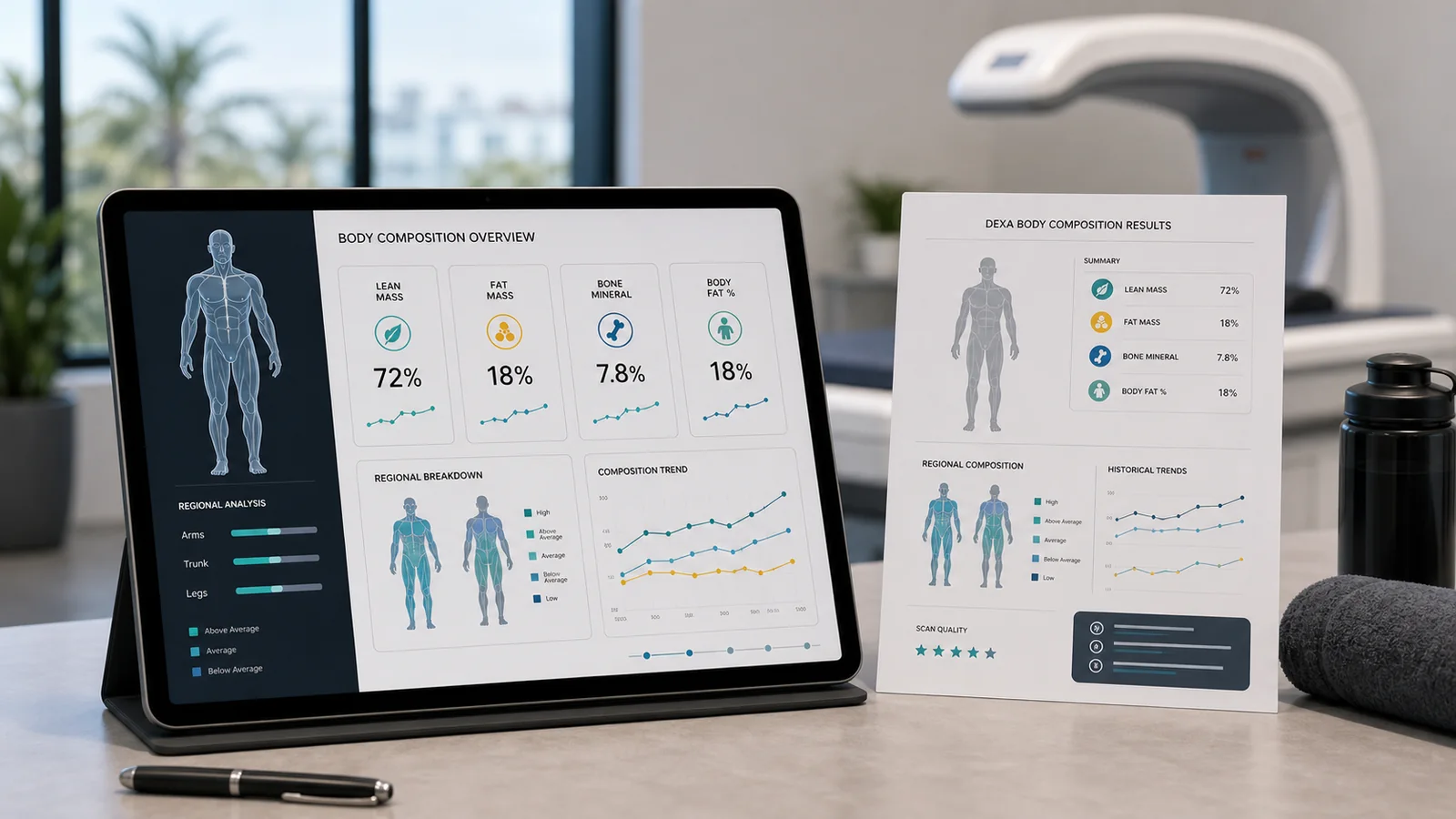
A DEXA scan result is most useful when you read it as a pattern, not a scorecard. Start with body fat percentage, but do not stop there. Look at fat mass, lean mass, visceral fat, regional measurements, and the trend between scans.
For most fitness and wellness clients, the most useful question is: did the result move in the direction your plan was supposed to move it? Fat mass down and lean mass stable means something different from weight down with lean mass dropping quickly.
CLUB DEXA is opening soon in Irvine, and Founding Members can lock in $49 standard DEXA body composition scans for life before booking opens, subject to additional terms. Repeat scans are where result interpretation becomes most valuable.
What to read first
- Body fat percentage: useful ratio, but not the whole story.
- Fat mass: estimated pounds or kilograms of fat tissue.
- Lean mass: non-fat tissue estimate, including muscle and body water.
- Visceral fat: estimated internal abdominal fat, when available.
- Regional data: arms, legs, trunk, android/gynoid, or similar regions.
- Trend: the most useful comparison after your first scan.
If you are still learning what the scan measures, start with what a DEXA body composition scan is.
If this is your first appointment, it may also help to read what to expect during your first DEXA scan before you review the report.
Body fat percentage
Body fat percentage tells you what share of your total body mass is estimated to be fat mass. It is useful, but it should not be treated as the whole story.
Because it is a ratio, body fat percentage can change when fat mass changes, lean mass changes, or both. Someone can improve body fat percentage by losing fat, gaining lean mass, or doing a combination of the two.
That is why you should read body fat percentage alongside fat mass and lean mass.
If you are looking for context around ranges, read what is a good body fat percentage on a DEXA scan?
Fat mass
Fat mass is the estimated amount of body mass from fat tissue. For fat loss goals, this number often matters more than scale weight.
If your body weight is stable but fat mass is lower, that can be meaningful progress. If your body weight is falling but fat mass is not changing much, the rest of the report deserves a closer look.
Fat mass is also useful for comparing scans across time. A clear trend can help you see whether a training or nutrition phase is moving in the intended direction.
Lean mass
Lean mass includes muscle and other non-fat tissues. For fitness tracking, lean mass is useful because it helps you see whether weight change is coming with the kind of body composition change you want.
During fat loss, many people want fat mass to decrease while lean mass stays relatively stable. During a muscle gain phase, people often want lean mass to trend upward without fat mass increasing faster than intended.
Lean mass is not a perfect one-to-one measure of muscle. Hydration, glycogen, and other factors can influence lean tissue estimates. Still, lean mass can be very useful when tracked consistently over time.
Visceral fat
Some DEXA reports include an estimate of visceral fat, which is fat stored deeper in the abdominal area around internal organs. This is different from subcutaneous fat, which sits closer to the skin.
Do not interpret visceral fat as a diagnosis from a fitness scan. Use it as one more trend marker alongside waist measurement, fat mass, training, nutrition, and guidance from a qualified healthcare professional when medical risk is part of the conversation.
Regional results
Many DEXA body composition reports include regional data for areas such as arms, legs, and trunk. This can help athletes, lifters, and bodybuilders understand where changes may be happening.
Regional data should be interpreted carefully. It is best used with photos, measurements, training logs, and performance trends rather than as a perfect measure of individual muscles.
The trend matters most
One scan is a snapshot. Two or more scans create a trend.
The most useful question is not, "Is this number good or bad?" A better question is, "Is this moving in the direction that matches my goal?"
For example:
- Fat mass down and lean mass stable may suggest a productive fat loss phase.
- Lean mass up with controlled fat gain may suggest a productive gaining phase.
- Weight stable with fat mass down and lean mass up may suggest recomposition.
- Lean mass dropping faster than expected may be a reason to review training, protein, calories, and recovery.
Avoid overreacting to one number
DEXA is a helpful tool, but it is not a final judgment on your health, fitness, or effort. Use the report as feedback.
Hydration, recent training, food intake, and timing can affect body composition estimates. For repeat scans, try to keep the conditions similar so the comparison is cleaner.
For a deeper look at repeatability, read DEXA scan accuracy: what can affect results.
What to do after your scan
After your first scan, choose one clear goal and one follow-up window. If you are focused on fat loss, track fat mass and lean mass separately. If you are focused on muscle gain, compare lean mass with training performance. If you are focused on maintenance, use the scan as a periodic check-in.
Most people do not need to scan constantly. During a focused phase, a follow-up scan after several weeks is usually more useful than frequent testing with little time for change.
If you are deciding where to get your first scan or follow-up scan locally, read the guide to DEXA scans in Irvine and Orange County.
Quick FAQ
What is the most important DEXA result?
The trend is usually more important than one number. On a first scan, focus on body fat percentage, fat mass, lean mass, visceral fat, and regional data as your baseline.
Is lean mass the same as muscle?
Not exactly. Lean mass includes muscle, water, organs, connective tissue, and other non-fat tissue. It is useful for tracking, but it is not a direct muscle-only measurement.
What does it mean if weight is down but lean mass is down too?
It may be worth reviewing protein intake, resistance training, calories, recovery, hydration, and scan conditions. Talk with your clinician, dietitian, coach, or trainer when appropriate.
How often should I compare results?
Most people need enough time for a real trend. During an active goal phase, a follow-up after several weeks is usually more useful than frequent scans close together.
Why does Founding Member pricing matter?
DEXA is most useful when you can repeat it. Locking in $49 standard scans makes baseline-and-follow-up tracking easier to plan.
Sources and further reading
- Body composition with dual energy X-ray absorptiometry: from basics to new tools
- Dual Energy X-Ray Absorptiometry Body Composition Reference Values from NHANES
- CDC: BMI Frequently Asked Questions
CLUB DEXA approach
CLUB DEXA helps clients in Irvine and Orange County use DEXA results as practical fitness feedback. The scan is not a diagnosis. It is a better way to understand body composition trends and make more informed training and nutrition decisions.
The value is in repeat tracking. Your first result is the baseline; the next result is the comparison.
Join the Founding Member List before booking opens to lock in $49 standard DEXA body composition scans for life, subject to additional terms. No payment today.
Related articles
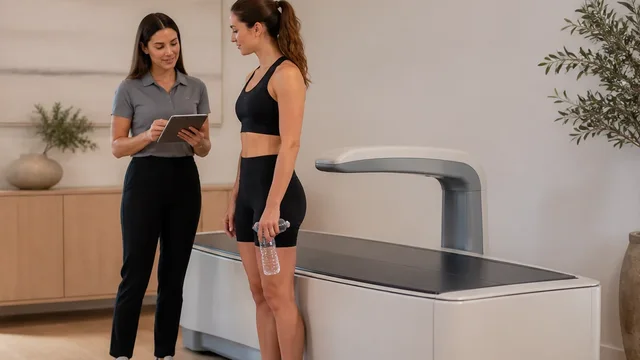
Should You Drink Water Before a DEXA Scan?
Learn how water intake can affect a DEXA body-composition result and how to keep repeat scans more comparable.
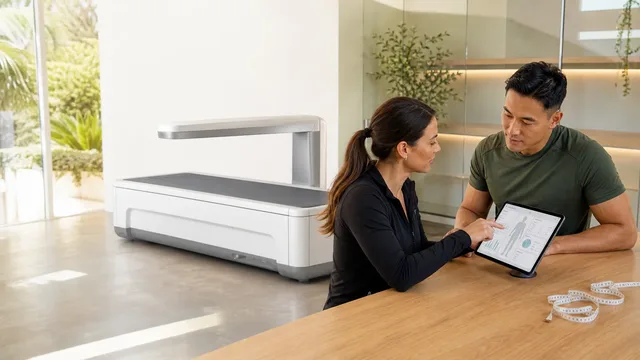
DEXA Scan vs Waist Measurement: What Each Can Tell You
Compare a DEXA body-composition scan with a waist measurement, including what each tracks, why the numbers are not interchangeable, and how to use both in a repeatable progress routine.
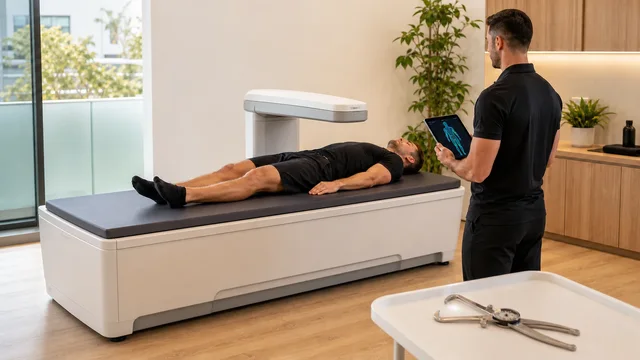
DEXA Scan vs Skinfold Calipers: Which Is Better for Body Fat Tracking?
Compare DEXA scans and skinfold calipers for body-fat tracking, including what each method measures, why the results differ, and how to choose a repeatable baseline.



Join as a Founding Member
Lock in $49 DEXA scans for life. Join the Founding Member List before booking opens in Irvine. Your standard body composition scan price will never increase, subject to additional terms. Expected regular pricing after launch starts at $89 per scan.
- $49 scans for life
- Priority launch booking
- No cost to join
No payment today. No spam. Your Founding Member price will never increase. Founding pricing applies to standard CLUB DEXA body composition scans for the registered email/account holder. Founding Member pricing includes up to 6 standard scans per calendar year. Additional scans are subject to regular pricing. Non-transferable. Excludes add-ons, bundles, third-party services, and special clinical services. Subject to appointment availability. Expected regular pricing may change before or after launch. Email verification is required before Founding Member pricing is treated as locked.