Quick answer
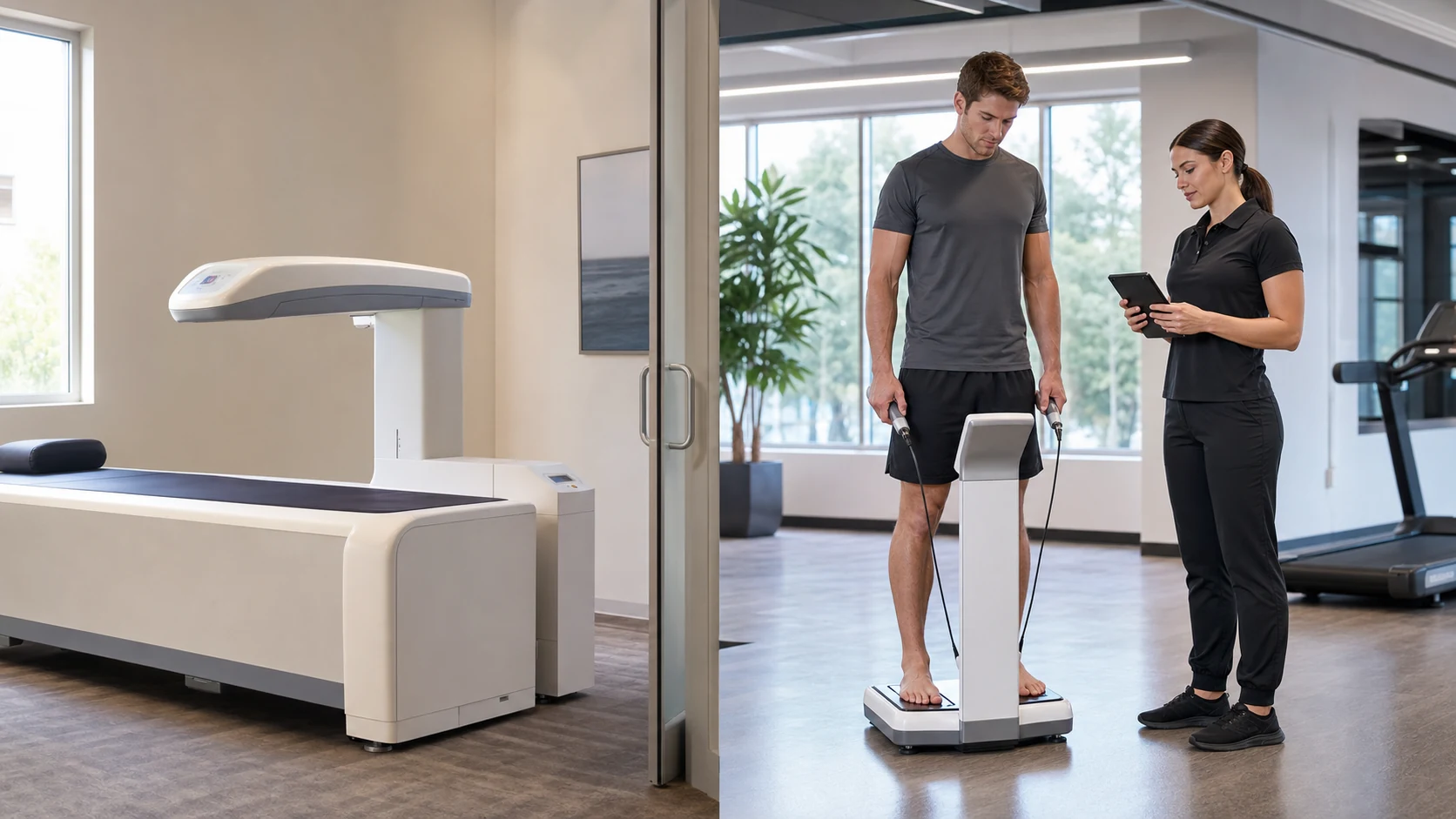
DEXA and InBody can both be useful, but they answer different jobs. InBody is convenient for quick check-ins. DEXA is usually the better choice when you want a stronger baseline or a higher-detail milestone scan for fat loss, lean mass, body recomposition, GLP-1 weight loss tracking, or physique goals.
InBody uses bioelectrical impedance analysis, which is fast but sensitive to hydration, recent meals, exercise, sodium, and device equations. DEXA uses dual-energy X-ray technology to estimate fat mass, lean mass, body fat percentage, and regional body composition.
If the result will shape a training, nutrition, or follow-up decision, choose DEXA. If you just want a quick rough trend between bigger checkpoints, InBody can still have a place.
CLUB DEXA is opening soon in Irvine, and Founding Members can lock in $49 standard DEXA body composition scans for life before booking opens, subject to additional terms. There is no payment today.
What to know before you choose
- Choose DEXA for: a baseline, milestone scan, regional data, fat mass vs lean mass tracking, and repeat comparison.
- Choose InBody for: quick check-ins when convenience matters more than detail.
- Biggest InBody limitation: hydration and short-term conditions can shift estimates.
- Biggest DEXA limitation: it is still an estimate, so compare trends under similar conditions.
- Best tracking strategy: compare the same method over time instead of mixing tools.
- CLUB DEXA offer: $49 standard scans for life, subject to additional terms for Founding Members before booking opens.
For local scan access and appointment context, read the guide to DEXA scans in Irvine and Orange County.
How InBody works
InBody devices use bioelectrical impedance analysis, often called BIA. The device sends a small electrical signal through the body and uses that signal, along with built-in equations, to estimate body composition.
BIA can be fast and convenient. That is why it appears in many gyms, clinics, and fitness centers.
The tradeoff is that readings can be affected by hydration, food intake, recent exercise, sodium, and other short-term variables. Research comparing standing multi-frequency BIA with DXA has found useful precision, but also systematic differences such as underprediction of body fat percentage in some settings. If you use InBody, consistent testing conditions matter.
If you are comparing more than these two options, read the broader guide to the best way to measure body fat percentage near Irvine.
How DEXA works
DEXA uses dual-energy X-ray technology to estimate body composition. A DEXA body composition report typically includes fat mass, lean mass, body fat percentage, and regional measurements.
Because it provides more detail than many quick testing options, DEXA is often used by people who want a stronger baseline and clearer progress tracking.
For a deeper explanation, read what a DEXA body composition scan is.
Where InBody is helpful
InBody can be useful when convenience matters most. If your gym has a device and you test under similar conditions, it may help you watch broad trends.
It can also be helpful for quick check-ins between more formal body composition milestones. The key is not to overreact to one reading, especially if your hydration, training, or recent meals were different than usual.
Where DEXA is stronger
DEXA is a better fit when the result will influence a bigger decision. Examples include starting a fat loss phase, beginning a lean mass phase, checking a contest prep milestone, or establishing a first body composition baseline.
DEXA can also be more useful when regional information matters. Lifters, physique athletes, and people tracking recomposition often want more than a single body fat estimate.
That does not mean DEXA is magic. It is still an estimate, and repeatability matters. The advantage is that the report gives you a clearer set of numbers to compare: fat mass, lean mass, body fat percentage, and regional changes.
DEXA vs InBody for fat loss
During fat loss, the goal is usually to reduce fat mass while preserving lean mass. A scale cannot show that distinction.
InBody can provide an estimate, but DEXA gives a more detailed report that many people prefer when decisions matter. If your weight is dropping but lean mass is dropping too, your plan may need a closer look.
For a goal-specific guide, see DEXA scan for fat loss tracking.
DEXA vs InBody for muscle gain
During a lean mass phase, total weight gain is not automatically a win. You want to know whether you are gaining useful lean tissue or adding more fat than intended.
DEXA helps lifters and athletes evaluate lean mass changes over time. It can also show regional trends that may support training decisions when combined with performance, photos, and measurements.
Read more about using a DEXA scan for muscle gain and lean mass.
How to compare results fairly
Avoid taking an InBody result one week and a DEXA result the next week and assuming the difference is true progress. Different tools estimate body composition differently.
For cleaner tracking, compare progress within the same method whenever possible. If you choose DEXA for baseline and milestone scans, use future DEXA scans as your main comparison points.
For a deeper look at repeatability, read DEXA scan accuracy: what can affect results.
Quick FAQ
Is DEXA more accurate than InBody?
DEXA is generally treated as the higher-detail body composition method because it estimates fat mass, lean mass, and regional composition. InBody can still be useful, but results are more sensitive to hydration and testing conditions.
Is InBody good enough for fat loss?
It can be good enough for rough trends if you test consistently. If the result will change your calories, training, or timeline, a DEXA milestone scan gives more context.
Should I compare my InBody number to my DEXA number?
Not directly. Use each tool as its own trend line. If DEXA is your baseline, compare future DEXA scans to that baseline.
Which is better for muscle gain?
DEXA is usually better for milestone checks because it can estimate lean mass and regional changes. Still pair it with strength, photos, measurements, and training logs.
Is there payment today to join CLUB DEXA?
No. Joining the Founding Member List secures the $49 standard scan price before booking opens, subject to additional terms, with no payment today.
Sources and further reading
- Body composition with dual energy X-ray absorptiometry: from basics to new tools
- High precision but systematic offset in a standing bioelectrical impedance analysis compared with DXA
- Acute fluid intake impacts assessment of body composition via bioelectrical impedance analysis
Which should you choose?
Choose InBody if you want a quick, convenient estimate and understand the limitations. Choose DEXA if you want a detailed baseline, a milestone scan, or a clearer way to track fat mass and lean mass over time.
For CLUB DEXA clients in Irvine and Orange County, DEXA is positioned as a higher-detail checkpoint for fat loss, lean mass, bodybuilding, and long-term progress tracking.
The reason Founding Member pricing matters is repeat tracking. If you want to scan once, $49 is a strong first baseline. If you want to scan again later, locking in that price makes DEXA easier to use the way it works best: baseline, act, rescan, compare.
Join the Founding Member List before booking opens to lock in $49 standard DEXA body composition scans for life, subject to additional terms. Expected regular pricing after launch starts at $89 per standard scan. No payment today.
Related articles
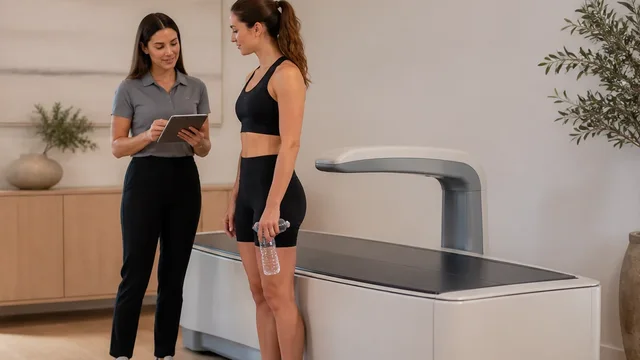
Should You Drink Water Before a DEXA Scan?
Learn how water intake can affect a DEXA body-composition result and how to keep repeat scans more comparable.
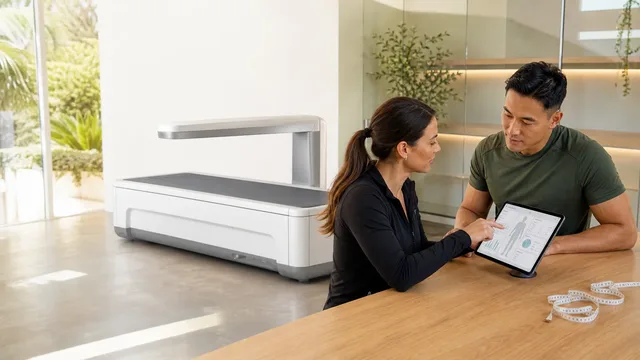
DEXA Scan vs Waist Measurement: What Each Can Tell You
Compare a DEXA body-composition scan with a waist measurement, including what each tracks, why the numbers are not interchangeable, and how to use both in a repeatable progress routine.
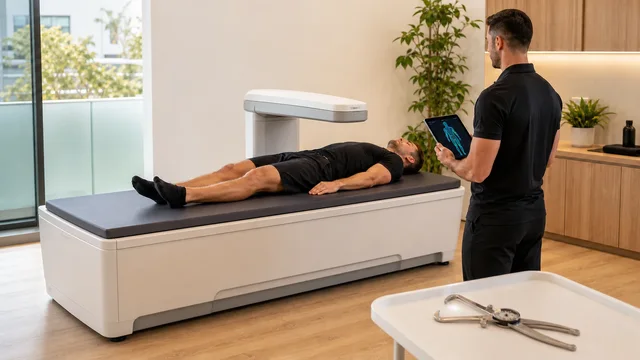
DEXA Scan vs Skinfold Calipers: Which Is Better for Body Fat Tracking?
Compare DEXA scans and skinfold calipers for body-fat tracking, including what each method measures, why the results differ, and how to choose a repeatable baseline.

Join as a Founding Member
Lock in $49 DEXA scans for life. Join the Founding Member List before booking opens in Irvine. Your standard body composition scan price will never increase, subject to additional terms. Expected regular pricing after launch starts at $89 per scan.
- $49 scans for life
- Priority launch booking
- No cost to join
No payment today. No spam. Your Founding Member price will never increase. Founding pricing applies to standard CLUB DEXA body composition scans for the registered email/account holder. Founding Member pricing includes up to 6 standard scans per calendar year. Additional scans are subject to regular pricing. Non-transferable. Excludes add-ons, bundles, third-party services, and special clinical services. Subject to appointment availability. Expected regular pricing may change before or after launch. Email verification is required before Founding Member pricing is treated as locked.