Quick answer
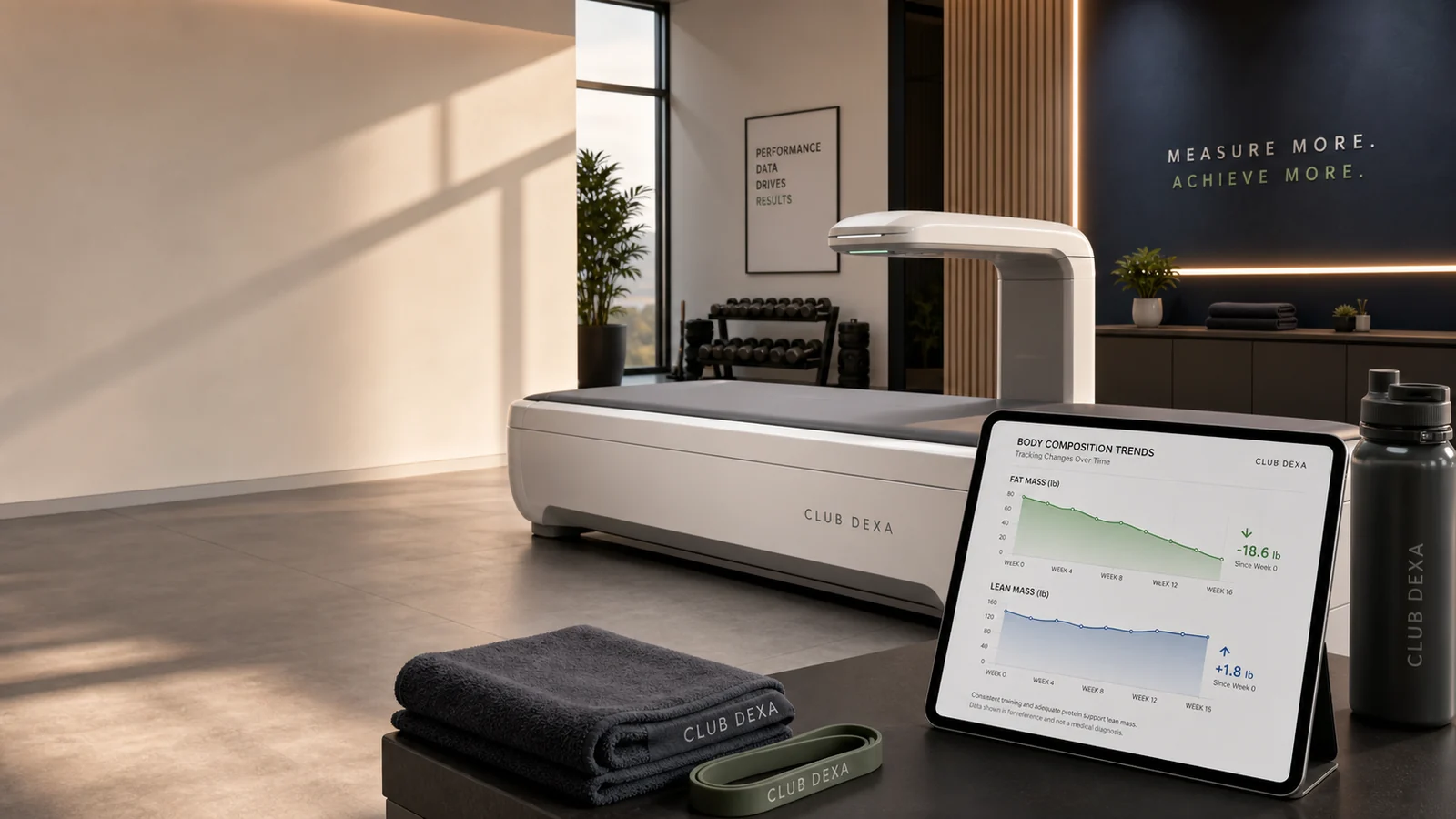
If your weight is dropping quickly, the scale cannot tell you whether the change is mostly fat mass, lean mass, water, glycogen, or a mix of all of them. A DEXA body composition scan can help separate the trend into fat mass, lean mass, body fat percentage, visceral fat, and regional changes.
That is the real question behind "fat loss vs muscle loss." If your weight is changing fast, you probably want to know whether your plan is improving body composition or whether you are giving up more lean tissue than expected.
DEXA does not diagnose why weight loss is happening, and it does not replace medical care. If your weight loss is unintentional, extreme, or paired with symptoms that concern you, talk with a qualified clinician before treating it as a fitness tracking problem.
For planned fat loss, DEXA gives you a clearer checkpoint than scale weight alone.
CLUB DEXA is opening soon in Irvine. Founding Members can lock in $49 standard DEXA body composition scans for life before booking opens, subject to additional terms, with no payment today.
What to check during rapid weight loss
- Fat mass: is the plan actually reducing fat tissue?
- Lean mass: is non-fat tissue dropping faster than expected?
- Body fat percentage: did the ratio improve because fat changed, lean mass changed, or both?
- Visceral fat: is deeper abdominal fat trending down, if reported?
- Performance and recovery: does the scan match how you feel and train?
- Medical context: unintentional or symptomatic weight loss needs clinician guidance.
Why fast weight loss can be hard to interpret
Body weight can fall quickly for several reasons. Some of the drop may be fat mass. Some may be water and glycogen, especially early in a diet change. Some may be lean mass, which includes muscle but also water, connective tissue, organs, and other non-fat tissue.
This is why two people can lose the same number of pounds and have very different outcomes. One person may lose mostly fat mass while keeping lean mass relatively stable. Another person may lose a larger share of lean mass, especially if the weight loss is aggressive, training is inconsistent, nutrition is low, or recovery is poor.
DEXA does not tell you exactly why the change happened. It helps you see what changed so you can ask better follow-up questions.
If you want the broader foundation first, read DEXA Scan for Fat Loss Tracking.
What DEXA can show during rapid weight loss
A DEXA scan can estimate several numbers that matter when weight is dropping quickly:
- Fat mass
- Lean mass
- Body fat percentage
- Regional fat and lean mass
- Bone mineral content
- Visceral fat estimate, if included on your report
For rapid weight loss, the most useful comparison is usually between a baseline scan and a follow-up scan. If fat mass is down and lean mass is fairly stable, the trend may support that your plan is producing the kind of change you wanted. If both fat mass and lean mass are dropping quickly, the scan gives you a reason to review the plan with the right professional support.
Because DEXA estimates lean mass rather than pure muscle tissue, it should be paired with real-world context: strength, training logs, energy, recovery, photos, measurements, and how your plan is being supervised.
Muscle loss vs lean mass loss
"Muscle loss" is the phrase people usually search for, but DEXA reports lean mass. That distinction matters.
Lean mass includes skeletal muscle, but it also includes body water and other non-fat tissue. A short-term change in hydration, recent hard training, inflammation, food timing, or glycogen can affect the lean mass number. That does not mean the report is useless. It means small changes should be interpreted carefully.
A large or repeated lean mass drop is more meaningful than a tiny difference between two scans. The trend is the point.
For help understanding report numbers, read How to Read DEXA Scan Results. If you are concerned about measurement noise, read DEXA Scan Accuracy: What Can Affect Results?.
When rapid weight loss deserves a closer look
During planned weight loss, a fast scale drop may happen early and then slow down. That can be normal for some people, but the body composition trend still matters.
Consider getting more professional context if:
- Weight is dropping faster than your plan expected
- Strength or training performance is falling sharply
- Energy, sleep, or recovery feels unusually poor
- Appetite is very low for a long stretch
- Lean mass is falling more than expected between scans
- Weight loss is unintentional or comes with symptoms
CLUB DEXA does not diagnose medical conditions, prescribe nutrition, manage medications, or decide whether a weight-loss plan is safe. A scan can show body composition data. Your clinician, dietitian, coach, or trainer can help interpret what to do with that data.
What to discuss if lean mass is falling
If a follow-up scan shows more lean mass loss than you expected, avoid making abrupt changes based on the scan alone. Instead, bring the report to the person overseeing your plan.
Useful discussion topics may include:
- Whether the weight-loss pace fits your goals and health context
- Whether protein intake is appropriate for you
- Whether resistance training is present, progressive, and recoverable
- Whether calories, sleep, hydration, or stress need attention
- Whether medication, illness, or recent training could affect the result
- Whether your next scan should happen sooner, later, or after your plan stabilizes
The goal is not to panic over one number. The goal is to turn body composition data into a better conversation.
If you are using a GLP-1 medication, the article on how to track lean mass during GLP-1 weight loss covers that situation more directly.
Research on weight loss and body composition shows why this question matters: weight loss can include both fat mass and lean mass. Resistance training, appropriate protein intake, recovery, and professional guidance can all affect how a plan is interpreted.
When to scan during a rapid weight-loss phase
The best first scan is usually before the phase starts or as early as practical. That gives you a baseline for fat mass, lean mass, and body fat percentage.
For follow-up scans, many people wait long enough for a real trend to appear. During active fat loss, that often means roughly 8 to 12 weeks, though the right window depends on the plan, starting point, and professional guidance.
Avoid scanning so often that you start chasing normal fluctuation. DEXA is most useful as a checkpoint, not a daily scorecard.
For local scan access, see DEXA Scan in Irvine & Orange County. If you are comparing testing options nearby, the guide to the best way to measure body fat percentage near Irvine can help you choose the right tool.
Quick FAQ
Can DEXA tell fat loss from muscle loss?
DEXA can estimate fat mass and lean mass changes. It does not measure pure muscle loss directly, because lean mass includes muscle, water, organs, and other non-fat tissue.
Is rapid weight loss always bad?
Not always, but context matters. Planned weight loss, medical supervision, symptoms, training, nutrition, and body composition trends all change the interpretation.
What should I do if lean mass is dropping?
Do not panic from one scan. Review the report with your clinician, dietitian, coach, or trainer and look at protein, resistance training, calories, recovery, hydration, and scan conditions.
How soon should I rescan?
Many people wait long enough for a real trend, often around 8 to 12 weeks during active weight loss. Faster follow-up may make sense only when a professional is using the data for a specific decision.
Why does Founding Member pricing matter?
Rapid weight loss can change quickly. A locked $49 standard scan price makes it easier to establish a baseline and recheck without treating DEXA as a one-time expense.
Track rapid weight-loss changes with CLUB DEXA
If you are in Irvine or Orange County and your weight is changing quickly, CLUB DEXA can help you establish a baseline and compare follow-up scans for fat mass, lean mass, and body fat percentage.
Confirmed Founding Members lock in $49 standard DEXA body composition scans for life before booking opens, subject to additional terms. Expected regular pricing after launch starts at $89 per standard scan. There is no payment today, and email confirmation is required before Founding Member pricing is treated as locked.
Join the Founding Member List before booking opens.
Sources and fine print
- Body composition changes after dietary weight loss: insights from the DIETFITS trial
- Effects of dietary protein intake on body composition changes after weight loss in older adults
- Body composition with dual energy X-ray absorptiometry: from basics to new tools
Related articles
Should You Drink Water Before a DEXA Scan?
Learn how water intake can affect a DEXA body-composition result and how to keep repeat scans more comparable.
DEXA Scan vs Waist Measurement: What Each Can Tell You
Compare a DEXA body-composition scan with a waist measurement, including what each tracks, why the numbers are not interchangeable, and how to use both in a repeatable progress routine.
DEXA Scan vs Skinfold Calipers: Which Is Better for Body Fat Tracking?
Compare DEXA scans and skinfold calipers for body-fat tracking, including what each method measures, why the results differ, and how to choose a repeatable baseline.



Join as a Founding Member
Lock in $49 DEXA scans for life. Join the Founding Member List before booking opens in Irvine. Your standard body composition scan price will never increase, subject to additional terms. Expected regular pricing after launch starts at $89 per scan.
- $49 scans for life
- Priority launch booking
- No cost to join
No payment today. No spam. Your Founding Member price will never increase. Founding pricing applies to standard CLUB DEXA body composition scans for the registered email/account holder. Founding Member pricing includes up to 6 standard scans per calendar year. Additional scans are subject to regular pricing. Non-transferable. Excludes add-ons, bundles, third-party services, and special clinical services. Subject to appointment availability. Expected regular pricing may change before or after launch. Email verification is required before Founding Member pricing is treated as locked.