Quick answer
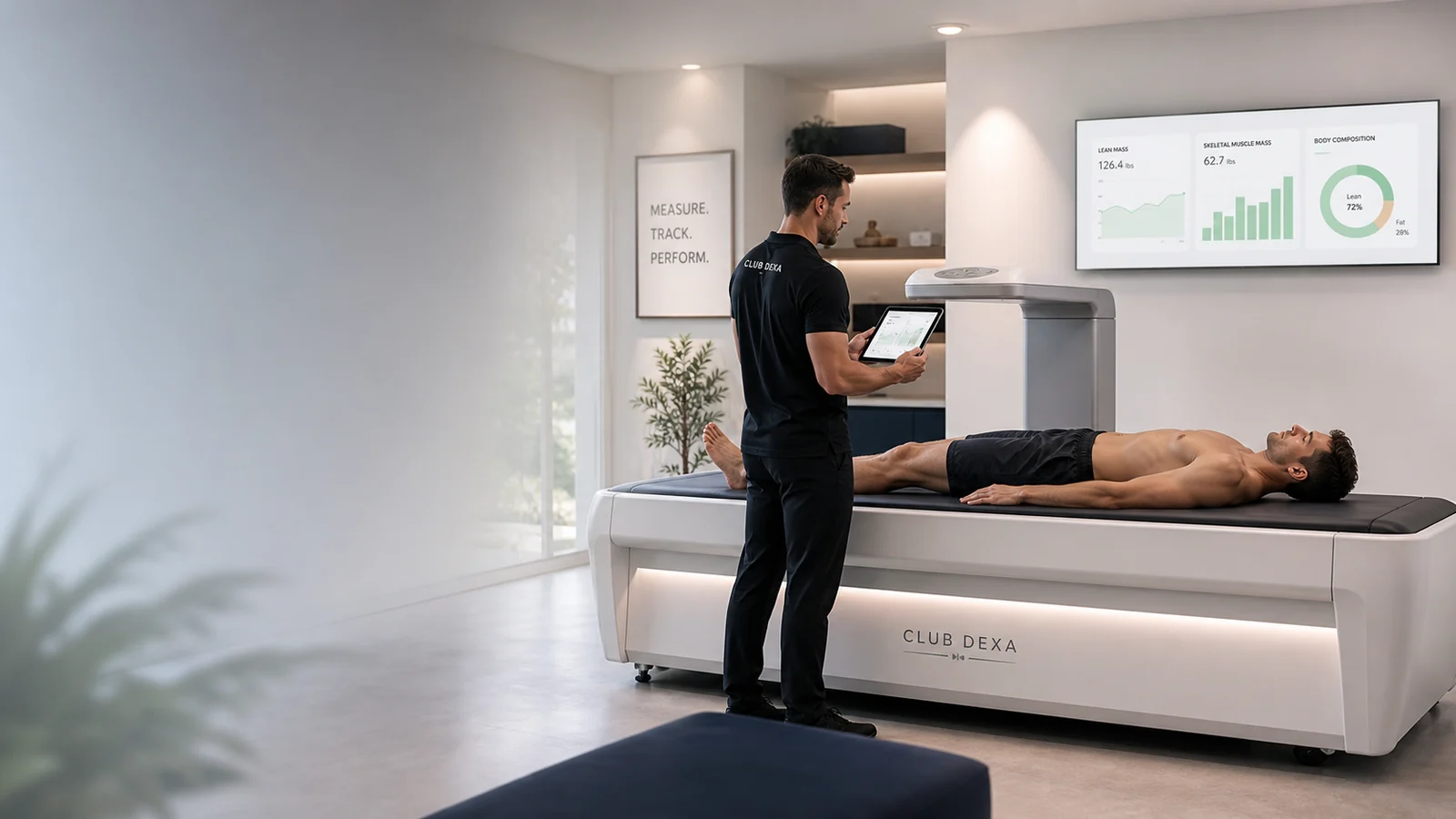
If you are losing weight on a clinician-guided GLP-1 plan, a DEXA scan can help you track whether lean mass is staying reasonably stable while fat mass decreases. That is the useful question the scale cannot answer.
Start with a baseline scan as early as practical, then compare a follow-up scan after a meaningful block of time. For many people, 8 to 12 weeks is a practical first recheck window during active weight loss.
CLUB DEXA does not prescribe GLP-1 medications, manage dosing, diagnose medical issues, or replace your clinician. Our role is to help people in Irvine and Orange County track body composition changes so they can have better-informed conversations with their clinician, dietitian, coach, or trainer.
What to watch between scans
- Total lean mass
- Regional lean mass
- Fat mass
- Body fat percentage
- Strength, training performance, and energy
- Protein intake, resistance training, recovery, and weight-loss pace
One DEXA result should not cause panic. The trend is what matters.
What lean mass means on a DEXA scan
On a DEXA body composition report, lean mass is everything that is not fat mass or bone mineral content. That includes muscle, but it also includes water, connective tissue, organs, and other non-fat tissue.
That distinction matters. DEXA is useful for tracking lean mass trends, but it does not directly measure individual muscles or tell you whether a specific muscle is stronger. For that, you still need real-world context like strength training logs, performance, energy, recovery, photos, and how you feel.
Think of DEXA as a body composition checkpoint. It can show whether total and regional lean mass are trending up, down, or staying fairly stable while your weight changes.
If you want the broader GLP-1 body composition context first, start with DEXA Scan for GLP-1 Weight Loss.
Why lean mass can change during GLP-1 weight loss
GLP-1 medications can help many people reduce appetite and body weight when used under appropriate medical supervision. As with other forms of weight loss, the body weight lost may include both fat mass and some lean mass.
Research on incretin-based weight-loss medications has found that body composition changes can include reductions in fat mass and lean mass, although the amount varies by person, medication, plan, starting point, and study design. That does not mean GLP-1 medications are "muscle-loss drugs." It means body composition should be watched thoughtfully, especially during faster or larger weight changes.
Several non-medication factors may influence lean mass trends during weight loss, including nutrition, resistance training, total calorie deficit, sleep, recovery, illness, hydration, and baseline activity level. Those factors should be reviewed with the right professional support rather than guessed from one scan alone.
What to compare between scans
The most useful DEXA insight comes from comparing a baseline scan with a follow-up scan. Look at the pattern, not just one number.
Key numbers to review include:
- Total body weight
- Fat mass
- Lean mass
- Body fat percentage
- Regional lean mass
- Visceral fat estimate, if included on your report
For GLP-1 weight loss, the basic question is whether fat mass is decreasing while lean mass is reasonably preserved for your situation. If the scale is dropping but lean mass is falling faster than expected, that is a signal to discuss your plan with your clinician, dietitian, coach, or trainer.
DEXA cannot tell you why lean mass changed. It can help you notice the change sooner and ask better questions.
How to interpret lean mass changes carefully
Lean mass is not perfectly stable from day to day. Hydration, glycogen, recent hard training, inflammation, digestion, and scan conditions can all affect body composition readings.
That is why small changes should be interpreted cautiously. A tiny lean mass difference between two scans may be noise, normal fluid shift, or a true early trend. A larger pattern across multiple scans is usually more useful than reacting to one result.
For better comparisons, try to scan under similar conditions each time. Keep the time of day, food timing, hydration routine, training timing, and clothing as consistent as practical. You do not need a perfect lab setup, but consistency makes the trend easier to read.
For a deeper walk-through of report numbers, read How to Read DEXA Scan Results.
What to discuss if lean mass is dropping
If your DEXA trend shows more lean mass loss than you expected, do not use the scan to self-manage medication or make abrupt changes on your own.
Instead, bring the results to the person overseeing your plan. Depending on your situation, useful discussion topics may include:
- Whether weight loss is happening too quickly for your goals
- Whether protein intake is appropriate for you
- Whether resistance training is sufficient and sustainable
- Whether recovery, sleep, and stress are limiting progress
- Whether illness, dehydration, or recent training affected the scan
- Whether the medication plan should be reviewed by the prescribing clinician
These are personal decisions. DEXA gives you measurement context; your care team helps interpret that context safely.
If your main goal is preserving or building muscle, the guide to DEXA Scan for Muscle Gain and Lean Mass explains how lean-mass tracking fits into training phases.
How often to check lean mass during GLP-1 weight loss
The right scan timing depends on your starting point, pace of weight loss, and how closely your care team wants to monitor changes. Many people use a baseline scan near the beginning of a GLP-1-supported weight-loss phase, then repeat after a meaningful block of time rather than scanning every few weeks.
For most fitness and wellness tracking, a follow-up after roughly 8 to 12 weeks can give enough time for a clearer trend. Longer gaps may make sense once your plan is stable.
If your main question is timing, read DEXA Scan Before and After GLP-1 Weight Loss for a more detailed baseline and follow-up scan strategy.
Quick FAQ
Does DEXA measure muscle?
DEXA estimates lean mass. Lean mass includes muscle, but it also includes water, organs, connective tissue, and other non-fat tissue.
What lean mass change should worry me?
There is no universal cutoff from one scan. A larger drop, repeated drop, or change that does not match your training, nutrition, or recovery is worth discussing with your care team.
Can I use DEXA to adjust my medication?
No. Medication decisions belong with the prescribing clinician. DEXA can help you bring better body composition information to that conversation.
How can I make scans easier to compare?
Use the same provider when possible, scan at a similar time of day, wear similar clothing, and keep hydration, meals, and recent training reasonably consistent.
Is lean mass the only number that matters?
No. Fat mass, body fat percentage, regional body composition, performance, and how you feel all add context.
Where CLUB DEXA fits
CLUB DEXA provides DEXA body composition scans for fitness and wellness tracking. We help you measure fat mass, lean mass, body fat percentage, and regional body composition so you can see what is changing during a weight-loss phase.
We do not prescribe GLP-1 medications, recommend peptide use, diagnose medical conditions, or tell you how to change a medical plan. If you are using a GLP-1 medication, your prescribing clinician should remain your primary source for medical decisions.
For local details, visit DEXA Scan in Irvine & Orange County. If you are comparing scan options, you may also find DEXA Scan for Fat Loss Tracking helpful.
Track lean mass with CLUB DEXA
If you are in Irvine or Orange County and want a clearer baseline before or during GLP-1 weight loss, CLUB DEXA can help you track body composition changes over time.
Confirmed Founding Members lock in $49 standard DEXA body composition scans for life before booking opens, subject to additional terms. Expected regular pricing after launch starts at $89 per standard scan. There is no payment today, and email confirmation is required before Founding Member pricing is treated as locked.
Join the Founding Member List before booking opens to make baseline and follow-up scans easier to repeat at the Founding Member price.
Sources and further reading
- Body composition changes during weight reduction with tirzepatide in the SURMOUNT-1 study
- Incretin therapies for weight loss and the risk of skeletal muscle loss
- Body composition with dual energy X-ray absorptiometry: from basics to new tools
Related articles
Should You Drink Water Before a DEXA Scan?
Learn how water intake can affect a DEXA body-composition result and how to keep repeat scans more comparable.
DEXA Scan vs Waist Measurement: What Each Can Tell You
Compare a DEXA body-composition scan with a waist measurement, including what each tracks, why the numbers are not interchangeable, and how to use both in a repeatable progress routine.
DEXA Scan vs Skinfold Calipers: Which Is Better for Body Fat Tracking?
Compare DEXA scans and skinfold calipers for body-fat tracking, including what each method measures, why the results differ, and how to choose a repeatable baseline.


Join as a Founding Member
Lock in $49 DEXA scans for life. Join the Founding Member List before booking opens in Irvine. Your standard body composition scan price will never increase, subject to additional terms. Expected regular pricing after launch starts at $89 per scan.
- $49 scans for life
- Priority launch booking
- No cost to join
No payment today. No spam. Your Founding Member price will never increase. Founding pricing applies to standard CLUB DEXA body composition scans for the registered email/account holder. Founding Member pricing includes up to 6 standard scans per calendar year. Additional scans are subject to regular pricing. Non-transferable. Excludes add-ons, bundles, third-party services, and special clinical services. Subject to appointment availability. Expected regular pricing may change before or after launch. Email verification is required before Founding Member pricing is treated as locked.